
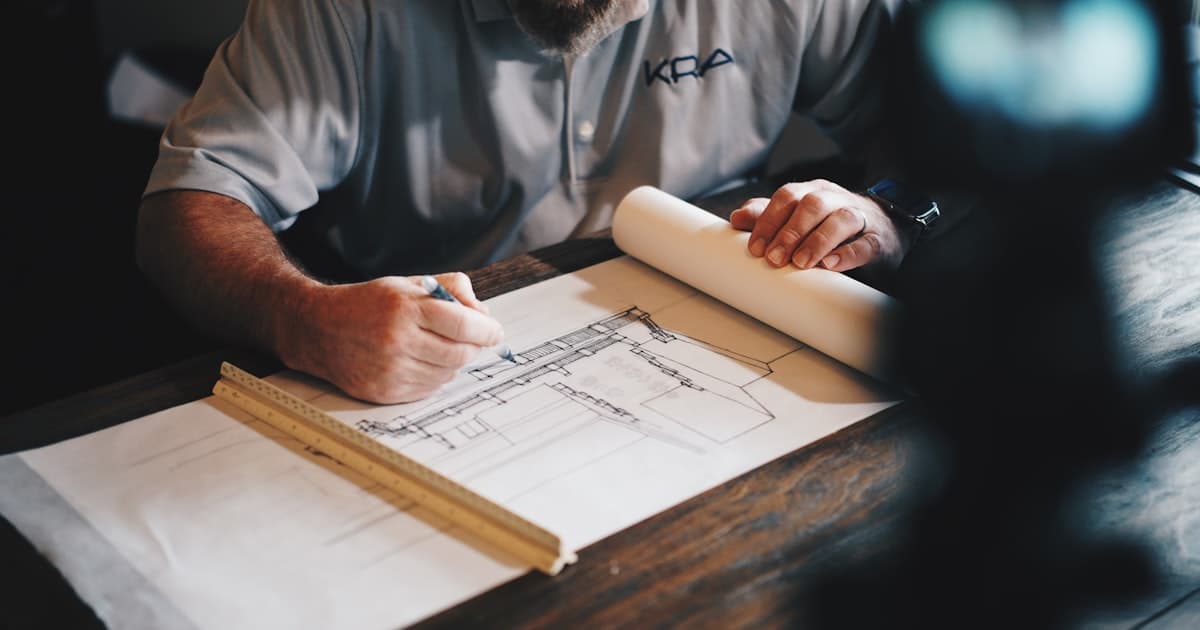
I'm designing my own home. Not "I hired an architect and I'm choosing finishes" designing — I mean I'm actively involved in the architecture, the floor plan, the structural thinking, the spatial design. It's the most complex, rewarding, and occasionally maddening project I've ever taken on outside of building businesses.
And here's what surprised me: the dream home design process is almost identical to the process of building a venture. The parallels are so direct that I started keeping notes, which eventually became this entry — and eventually became the seed of a new GAS Studio venture called Foundations of Architecture.
Foundations First (In Both Worlds)
In architecture for beginners, the first thing you learn is that everything depends on the foundation. Before you think about kitchen layouts or window placements or what color the front door should be, you have to understand the ground you're building on. Soil composition. Grade. Load paths. The invisible infrastructure that determines what's possible above it.
In business, the parallel is exact. Before Sundream was a product line, it was a legal entity, a bank account, and a set of operational systems. Before GAS Studio was a portfolio, it was an operating model and a philosophy. The tech stack comes before the ventures, just like the foundation comes before the walls.
The temptation — in both designing your own home and building a business — is to skip to the exciting stuff. The product. The kitchen. The brand launch. The master bathroom. But the work you do (or don't do) on the foundation determines the ceiling for everything above it.
The Blueprint Is Not the Building
One of the most humbling lessons of the home design process: the blueprint is beautiful on paper. Then you start building and discover that reality has opinions your blueprint didn't account for.
A wall that looks perfect in 2D creates an awkward sight line in 3D. A room that measures perfectly on the floor plan feels cramped when you stand in it. A material that looked stunning in the sample doesn't work at scale.
In business, we call this "the plan versus the execution." Every business plan is a blueprint. And every builder learns — sometimes painfully — that the plan only survives until it meets reality. The skill isn't creating the perfect plan. It's adapting gracefully when the plan meets the constraints you didn't anticipate.
At GAS Studio, we've internalized this through our approach to venture development. We plan enough to have direction, but we build systems that allow for iteration because we know the first version of anything — a product, a website, a business model — will need to evolve.
The blueprint matters. It's just not the final word.
Space, Flow, and User Experience
Architecture for beginners often focuses on individual rooms. But experienced architects think in flows — how do people actually move through a space? Where does natural light enter? What do you see when you walk through the front door? How does the kitchen relate to the dining area relate to the living room?
Great architecture creates an experience. It guides you through space in a way that feels natural, even inevitable. You don't notice good flow until you experience bad flow — a layout that makes you walk through the bedroom to get to the bathroom, or a kitchen with the refrigerator on the opposite side of the room from the counter.
The business parallel: user experience. How do people move through your product, your website, your sales process? We applied this thinking directly in the Margle Media website rebuild — every page was designed as part of a flow that guides visitors toward a specific action. Just like a well-designed home guides residents through their daily routines with minimal friction.
The dream home design process taught me to think about business flow with the same spatial awareness that an architect brings to a floor plan. Where are the bottlenecks? Where does the experience feel forced? Where can you create moments of delight?
Building vs. Designing: The Crucial Distinction
Here's a distinction that took me too long to learn, in both architecture and business: designing is not the same as building.
Designing is imagining what could be. Building is dealing with what is. Designing happens in clean, controlled environments — on screens, on paper, in your head. Building happens in the messy, unpredictable real world — where lumber is imperfect, timelines slip, costs overrun, and human beings do unexpected things.
The best architects — and the best builders of anything — are fluent in both. They can dream big in the design phase and get practical in the construction phase. They understand that the gap between the two isn't failure. It's the creative challenge that makes the work interesting.
In building GAS Studio's ventures, I've learned to love the gap. The design of Giveable is beautiful and ambitious. The building of Giveable involves messy decisions about payment processing, edge cases in the donation flow, and the mundane work of making software reliable. Both phases are essential. Neither alone produces anything worthwhile.
Why I'm Building a Course About This
The more I've gone through the dream home design process, the more I've realized how inaccessible architecture is for most people. Architecture for beginners barely exists as a category. There's professional architecture education (expensive, multi-year, aimed at people becoming architects) and there's Pinterest (beautiful pictures with no structural understanding).
What's missing is the middle ground — practical, accessible education for people who want to be informed participants in designing their own home without becoming licensed architects. How to read floor plans. How to think about spatial flow. How to communicate with architects and builders. How to make design decisions that you'll be happy with for decades.
That's Foundations of Architecture — a digital course that takes users through the complete process of designing their dream home, from concept to blueprint. It's currently in the Coming Soon phase, and the experience of designing my own home is the primary source material.
It's also a perfect example of the GAS Studio model in action: a personal passion (architecture) becoming a venture (course) that creates value for others (accessible home design education) and connects back to the studio's mission (doing good, at scale).
The Takeaway
Whether you're designing a house or a business, the principles are the same: start with the foundation, plan with flexibility, think about the experience of the person inside the thing you're building, and embrace the gap between design and reality.
And if you're designing your own home — enjoy it. It's one of the most creatively demanding, personally revealing, and ultimately satisfying projects you'll ever undertake. Just like building a business.
Foundations of Architecture is coming soon to the GAS Studio portfolio. Follow the Journal for updates, or get in touch if you're on your own home design journey.
This entry is part of our Purpose & Impact series. Subscribe to the GAS Studio Journal RSS feed to stay in the loop.
Related Venture
Foundations of Architecture
Design your dream home.


